
Transportation is the leading source of pollution in California. Since the 1950s, Californians have been advancing local and state policies to reduce transportation pollution. These policies have been successful, but as the number of cars on the road increases and the length of commutes grows, pollution remains a challenge and is a major contributor to lung disease and climate change.
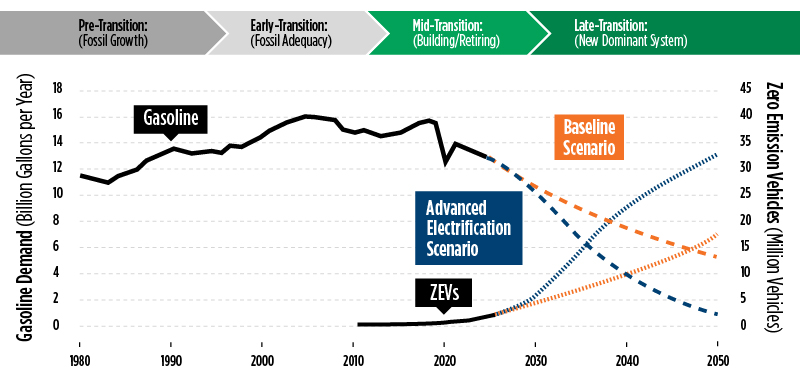
Like many governments around the world, California has begun to transition away from the use of petroleum-based transportation fuels. Efforts to incentivize zero-emission vehicles and build out clean fuel infrastructure in California are working: demand for oil is falling. However, California’s in-state refining capacity is contracting faster than demand, leading to increased volumes of imported fuel. Supporting supply and price stability is especially important as the state’s petroleum system evolves. Proactive planning is needed for the transition to a clean transportation sector that protects consumers, supports impacted workers and host communities, and facilitates a managed phase out of legacy infrastructure.
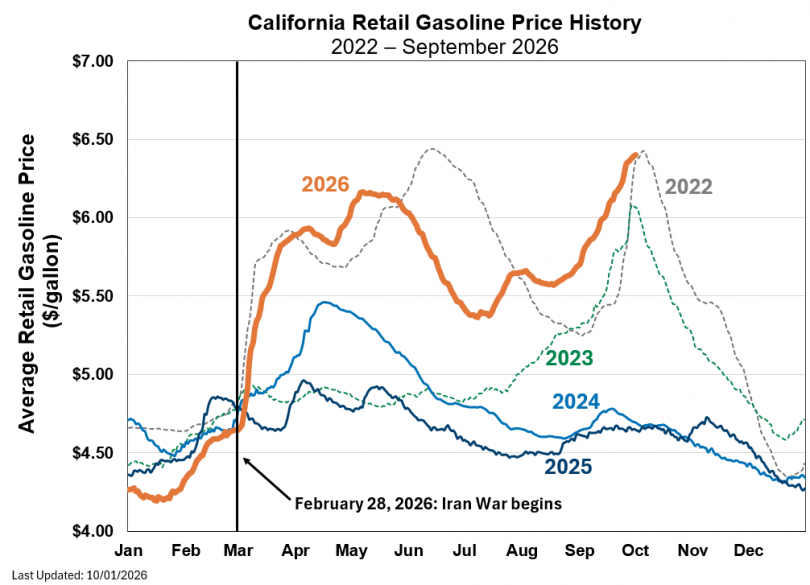
Consumers experienced some of the highest gasoline prices ever recorded in California in the fall of 2022. In response, the state Legislature enacted, and Governor Gavin Newsom signed two new laws to help the state better understand and respond to gasoline price spikes. The laws, Senate Bill X1-2 (2023) and Assembly Bill X2-1 (2024), created new industry reporting requirements and oversight measures to help the State better understand the petroleum industry, increase industry accountability, assess new regulatory authorities to avoid price spikes, and support long-term planning efforts. These new reporting requirements build on authorities already granted to California Energy Commission (CEC) in the Petroleum Industry Information Reporting Act (PIIRA) and Senate Bill 1322.
SB X1-2 and AB X2-1 laid the foundation for strategies that the state has been implementing to stabilize transportation fuel prices. And they’re working. For nearly two years—from the summer of 2024 until the Iran War began on February 28, 2026—retail gas prices in California remained relatively stable.
In October 2025, Governor Newsom signed another piece of legislation, Senate Bill 237, which advances additional measures to stabilize gasoline supply during California’s transition to a clean transportation system.
Questions about petroleum data
Energy Assessments Division
EAD@energy.ca.gov
Clean Transportation Program
Fuels and Transportation Division
FTD@energy.ca.gov
How to participate in Energy Commission proceedings
Public Advisor
Publicadvisor@energy.ca.gov
Questions from the press
Media & Public Communications Office
Mediaoffice@energy.ca.gov